Two Tools, Two Different Buyers
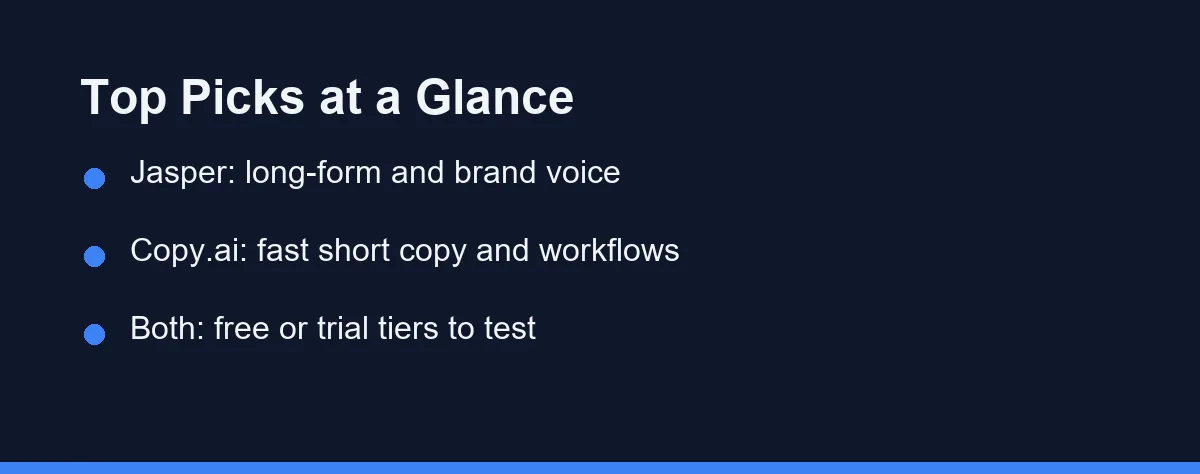
Jasper and Copy.ai keep landing on the same shortlists, and it is easy to see why. Both turn a short prompt into marketing copy, blog drafts, and social posts in seconds.
Look closer and they are built for different buyers. Jasper courts marketing teams and agencies with brand voice controls, long-form documents, and collaboration features.
Copy.ai courts freelancers and lean teams with fast short copy, workflow automation, and a genuinely free starting tier. Picking the wrong one usually means paying for depth you never touch, or fighting a tool that stops short of what you need.
So the quick answer is this. If you produce long articles and need consistent brand tone, Jasper is usually the stronger fit, while quick copy on a lighter budget points to Copy.ai.
Many buyers test both before committing, since each offers an entry point. For broader options, our roundup of the best AI writing tools covers more alternatives.
Depth Versus Speed
Jasper
Jasper positions itself as a platform for marketing teams and agencies, emphasizing brand voice, long-form documents, and a library of campaign templates. The interface is built around producing polished, on-brand assets at scale.
It suits users writing blog posts, landing pages, and longer marketing content. The trade-off is that it usually sits at a higher price point than lighter tools.
It also includes collaboration features for teams sharing assets, with reusable brand voices and templates that help several writers stay consistent. That depth is part of why agencies gravitate toward it.
Copy.ai
Copy.ai focuses on speed and short-form copy, with a friendly entry tier and many templates for ads, product descriptions, emails, and social posts. More recently it has leaned into workflow automation for sales and marketing tasks.
It suits freelancers, small teams, and anyone testing AI copy on a budget. Longer documents are possible, though that is not its core strength.
| Criteria | Jasper | Copy.ai |
|---|---|---|
| Best for | Long-form, marketing teams | Short copy, lean budgets |
| Brand voice | Strong, configurable | Available, lighter |
| Templates | Broad, campaign focused | Broad, short-form focused |
| Free tier | Trial based | Free tier offered |
| Workflow automation | Growing | A core focus |
| Team collaboration | Strong, shared assets | Lighter, growing |
| Long-form documents | A core strength | Possible, not the focus |
| Entry price | Higher | Lower |
| Learning curve | Moderate | Gentle |
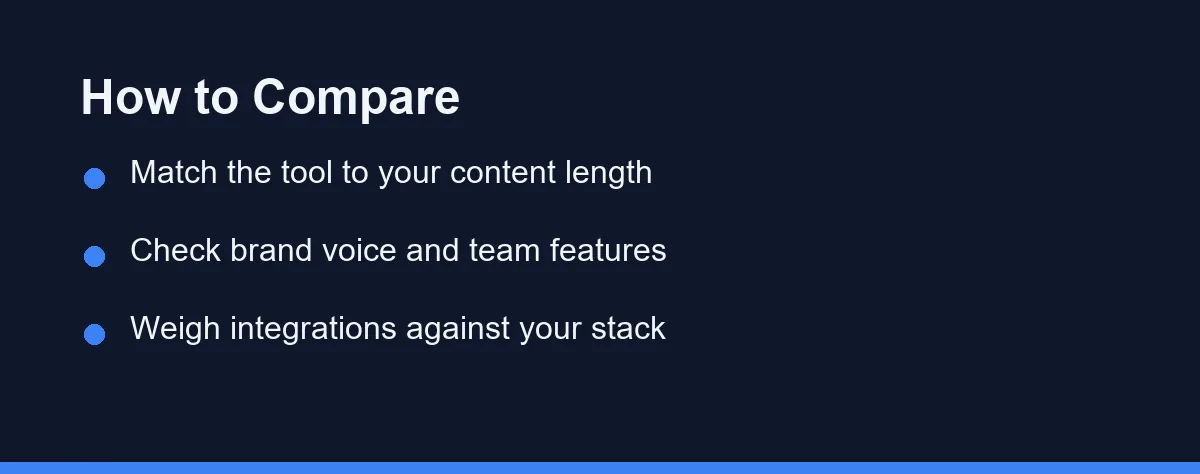
The pattern is consistent across every row. Jasper invests in depth, brand control, and longer documents, while Copy.ai invests in speed, accessibility, and automation.
Content length is the single most reliable predictor of which one you will keep. The mismatch between tool and task is the most common source of disappointment in this category.
Integrations decide the rest. Look at how each tool reaches the place you actually publish, whether that is a CMS, a browser extension, or a connection into the rest of your marketing stack.
Copy.ai leans hardest into that outward direction, since its workflow automation is designed to move copy between sales and marketing systems without a person pasting it. Jasper concentrates more on the document itself, which is the right emphasis when the output is a long article rather than a hundred short messages.
Editing tools and language support round out the comparison. Both produce usable first drafts, and the practical difference is how much of your day the cleanup takes.
Neither is your only choice. General assistants and specialised writers also handle copy well, and our guide to the best free AI tools is a useful place to scope cheaper options before paying.
Brand Voice When Several Writers Share One Account
This is the feature that separates the two most sharply, and it only matters above a certain team size.
Both tools let you save and apply a brand voice. Jasper’s controls are generally deeper and more configurable, while Copy.ai includes lighter voice features that cover basic consistency.
For a solo writer, that gap is close to irrelevant. You are the brand voice, and you catch drift while editing.
For four writers publishing weekly, the gap is the whole purchase. Saved voices, shared templates, and reusable assets are what keep output recognisable when the person writing changes every day.
Approval flows and seat management follow the same logic. Features that look like overhead at two people become the reason the tool earns its price at ten.
Ask yourself honestly how many people will touch the output. That answer decides this comparison more reliably than any sample draft.
There is a cheap way to test the claim before you pay. Write one paragraph in your own voice, save it as the brand voice in each tool, then ask both to produce three short pieces from the same brief.
Read the six results side by side and look for the tell-tale drift. Vocabulary that is slightly too formal, sentence rhythms you would never use, and enthusiasm you did not write are the three that leak through most often.
Whichever tool needs fewer corrections on that test will need fewer every week afterward, and that gap compounds far faster than a monthly price difference.
What Each Plan Costs
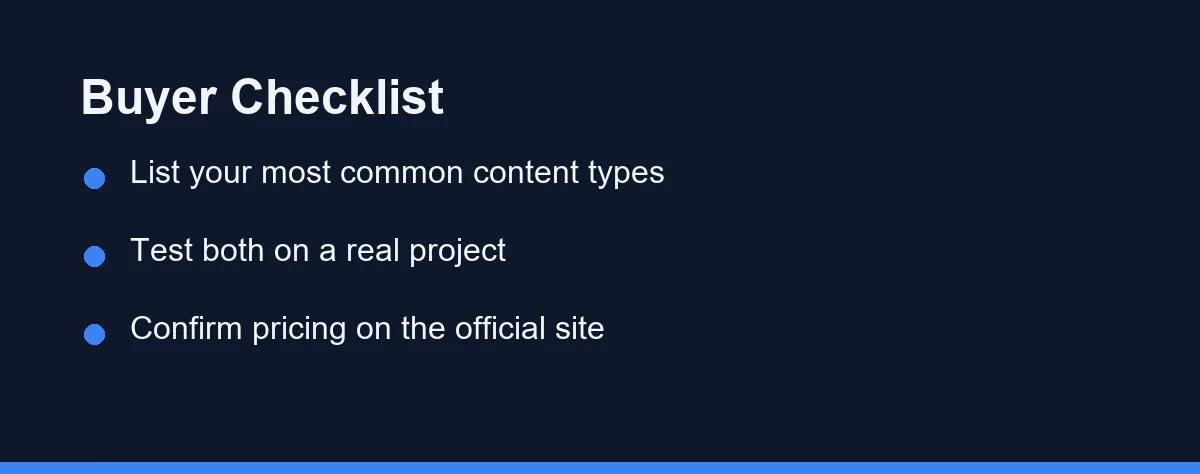
Pricing shifts frequently in this category, so avoid relying on old figures. Both tools use tiered plans that vary by features and usage, and limits and add-ons change across the year.
The table below lists approximate figures at the time of writing. Treat them as rough ranges and confirm current pricing on each official site.
| Plan | Jasper | Copy.ai |
|---|---|---|
| Free tier | Trial based, time limited | Free tier with monthly word limits |
| Entry paid | Creator plan around $39-49/mo (confirm current pricing) | Pro plan around $36-49/mo (confirm current pricing) |
| Team and business | Higher tiers with seats and brand controls | Team and enterprise workflow plans |
| Billing note | Cheaper on annual billing | Cheaper on annual billing |
In general terms, Copy.ai is positioned as the more budget-friendly option and offers a free tier, while Jasper sits higher to reflect its team and brand features. Annual billing often reduces the effective monthly cost on both.
Watch the gaps behind the headline number. Usage caps, seat limits, and feature gates determine what you actually pay, and a cheap entry plan with a low word limit is not cheap.
Do not pay for depth you will never use either. A solo creator rarely needs enterprise brand controls, so match the plan to your true team size rather than your ambitions for it.
If budget is the deciding factor, start with a free tier or trial. That lets you judge value against your own work before committing.
Annual billing deserves one caution. The discount is real, but it locks you into a tool you have used for a matter of weeks, so take the monthly rate for the first quarter and switch once you are certain.
Verdicts by Content Type
Neither tool wins every job, but each has situations it clearly owns. Use these direct picks to shortcut the decision.
- Best for long-form blog and marketing content: Jasper, with its document controls and campaign templates.
- Best for consistent brand voice across a team: Jasper, thanks to configurable saved voices and shared assets.
- Best for fast, short-form copy on a budget: Copy.ai, which starts free and moves quickly.
- Best for sales and marketing workflow automation: Copy.ai, where automation is a core focus.
- Best for a solo creator testing AI copy: Copy.ai, since the free tier lets you judge value before paying.
Some teams run both, drafting short copy in Copy.ai and building longer marketing assets in Jasper. That only makes sense once the volume in each lane justifies its own subscription.
Run One Real Brief Through Both
The decision comes down to depth versus speed, and to how many people share the account.
Do not judge either tool from a single demo prompt. Polished sample output rarely reflects your actual workload, and vendors choose prompts that flatter their strengths.
Run the same real assignment through each instead, then compare the editing effort rather than the first draft. Editing is where your time genuinely goes, and the tool that needs less of it wins regardless of which demo looked better.
Whichever you pick, do not publish the output unedited. Generic phrasing and unverified claims survive both tools happily, and only a human pass removes them.
If you already lean on a chat assistant, compare that too. Our ChatGPT vs Claude vs Gemini breakdown helps frame the wider choice, and current pricing sits on each official site.
FAQ
Is Jasper or Copy.ai better for long-form content?
Jasper is generally the stronger pick for long-form content like blog posts and articles. It offers more document controls, brand voice features, and templates aimed at marketing teams.
Is Copy.ai cheaper than Jasper?
Copy.ai is often positioned as the more budget-friendly option and offers a free tier. Pricing changes often, so check each official site for current plans before subscribing.
Can I use Jasper and Copy.ai together?
Yes. Some teams draft short copy in Copy.ai and use Jasper for longer marketing assets. Both have entry tiers, so testing each one on real work is the safest way to decide.
Is Jasper or Copy.ai better for a small team?
Jasper leans toward marketing teams and agencies that need brand voice, long-form documents, and collaboration. Copy.ai suits solo creators, freelancers, and small teams that want fast short copy and a free starting tier. Match the tool to your team size and content length.
Which tool has stronger brand voice controls?
Both let you save and apply a brand voice, but Jasper's controls are generally deeper and more configurable. Copy.ai includes lighter voice features that cover basic consistency. For strict on-brand output across many writers, Jasper usually goes further.
Sources
- Copy.ai pricing — checked 2026-09-27
- Jasper: Plans & Pricing — checked 2026-09-27
Some links may be affiliate links. We may earn a commission at no extra cost to you.
This article was written with AI assistance. It is researched and fact-checked, not based on personal hands-on testing unless explicitly stated.
Comments
Post a Comment