Two Answers to the Same Question
Pick Perplexity if research with cited sources is your main job, and ChatGPT if you mostly draft, code, or brainstorm. Perplexity links its sources beside each claim, which makes checking fast. ChatGPT is the broader all-rounder for writing and long conversations, and many people keep both.
Ask Perplexity and ChatGPT the same question and you often get two different kinds of answer. Perplexity hands you a sourced summary with links, and ChatGPT hands you a fluent draft you can keep shaping.
That contrast is the whole story. One optimizes for verification, the other for generation, and almost every practical difference follows from it.
ChatGPT, made by OpenAI, is a broad conversational assistant built for writing, coding, reasoning, and creative work. Perplexity positions itself as an answer engine that searches the live web and cites its sources beside each claim.
This guide compares them on source transparency, model depth, workflow fit, and cost, then gives direct picks by situation.
Verification or Generation

If your main job is research and you want citations beside every claim, Perplexity is the stronger default. It searches the live web and links sources directly, which makes checking fast and reduces guesswork.
If you need a flexible assistant for drafting, brainstorming, coding, and long conversations, ChatGPT is the safer all-rounder. Its model lineup is deep and its ecosystem is large.
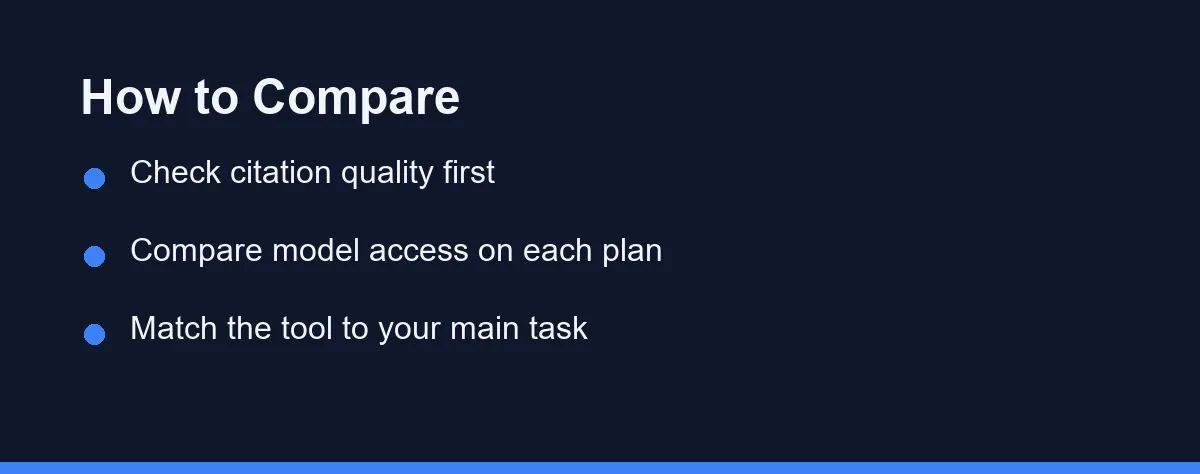
Rank a few factors by your own priorities before choosing. Source transparency matters most for factual work, model depth matters for coding and analysis, and workflow fit quietly decides which tool you actually open.
Many people keep both and switch by task. That is a legitimate answer rather than an indecisive one.
How Perplexity Handles a Question
Perplexity is built around web-grounded answers with inline citations. Each response typically lists the sources it drew from, so you can verify claims quickly.
That design makes it popular for research, news, and fast fact-finding. The interface stays clean and answer-first rather than conversational.
It also offers focused modes and a Pro search that runs deeper, multi-step queries. For people who value sourced information above everything else, it is a natural fit.
The trade-off is range. Answers lean short and reference-shaped, which serves a question well and serves a long drafting session less well.
It also changes how you ask. Perplexity rewards a precise, factual question with a good answer, while a vague or creative prompt produces a summary of whatever the web happens to say about the topic.
Follow-up behaviour differs too. The tool keeps context across a thread, but the shape of each reply stays answer-first rather than building on a document you are shaping together.
How ChatGPT Handles the Same One
ChatGPT is a general-purpose assistant with wide capabilities, excelling at writing, summarizing, coding, and extended back-and-forth conversation.
It supports multiple models, file uploads, image generation, voice, and custom assistants on paid tiers. Web browsing is available, though citations are less central than in Perplexity.
Its deeper reasoning models handle complex, multi-step problems well, which helps with analysis, structured planning, and detailed coding work.
The trade-off runs the other way. Answers arrive fluent and confident whether or not they rest on anything you can open and check.
Its real advantage is iteration. You can hand it a rough draft, ask for a different structure, then a different tone, and keep the thread alive across an afternoon of revisions.
That is a genuinely different activity from asking a question. Long threads, uploaded files, and custom instructions all serve the same purpose, which is shaping output rather than retrieving facts.
Side by Side on What Diverges
| Criteria | Perplexity | ChatGPT |
|---|---|---|
| Primary focus | Sourced answer engine | General assistant |
| Citations | Inline, prominent | Available, less central |
| Live web access | Core feature | Supported |
| Writing and brainstorming | Capable | Very strong |
| Coding help | Good | Very strong |
| Long conversations | Answer-first, shorter | Strong, extended threads |
| File and image handling | Growing | Broad and mature |
| Best for | Research and fact-finding | Drafting and reasoning |
| Free tier | Yes | Yes |
Perplexity leads when the goal is verifiable, source-linked information. ChatGPT leads on open-ended generation, coding, and conversational range.
Both perform well for everyday questions, so the gap narrows considerably for casual use. It widens sharply the moment accuracy or output length becomes the point.
For broader context, our guide to ChatGPT vs Claude vs Gemini is useful when weighing general assistants. If your interest is mainly writing, see our roundup of the best AI writing tools.
Citations, Recency, and What You Still Have to Check
Perplexity is often easier to trust for facts, because every claim links to a source you can open. That is a genuine structural advantage, and it is also frequently overstated.
A citation proves a source exists. It does not prove the source says what the summary claims, that the source is reliable, or that a better source contradicts it.
So open the links for anything that matters. The tool has made checking cheap rather than unnecessary, and confident phrasing is not evidence in either product.
Recency splits the two more cleanly. Perplexity searches the live web by default, which makes it stronger for current events and recent data, while ChatGPT leans on trained knowledge unless you prompt it to browse.
That single behaviour causes most disappointment with ChatGPT on timely questions. Ask it to search explicitly when the answer depends on this month rather than last year.
Two habits protect you regardless of which tool you use. Never accept an answer because it sounds authoritative, and never force one tool to do both jobs at once.
Gathering sources and drafting polished prose are different tasks with different failure modes. A research tool that writes flat prose and a writing tool that invents a statistic are each behaving exactly as designed.
The practical rule is to check anything you would be embarrassed to be wrong about in public. Everything else can stay unverified without much cost.
What the Paid Tiers Change
Both follow a freemium model. A free tier covers light use, while paid plans unlock stronger models, higher limits, and extra features.
| Plan | Perplexity | ChatGPT |
|---|---|---|
| Free tier | Yes, with limited Pro searches | Yes, with a capped model |
| Entry paid | Pro around $20/mo (confirm current pricing) | Plus around $20/mo (confirm current pricing) |
| What paid unlocks | Deeper Pro search, more model choice | Stronger models, higher limits, more tools |
| Higher tiers | Team and enterprise options | Team, Pro, and enterprise options |
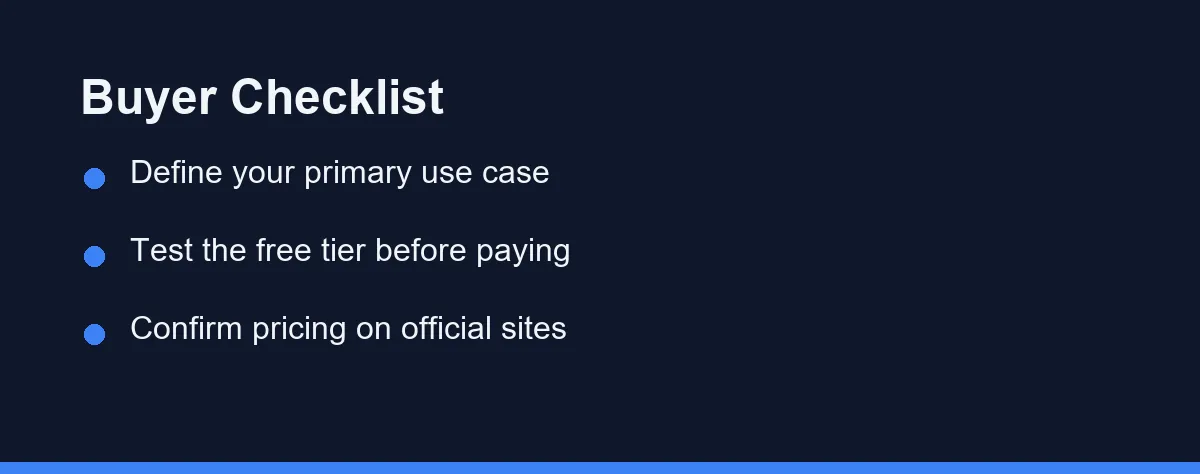
Those figures are approximate anchors at the time of writing rather than current quotes. Plan names, included models, and prices update frequently, so always confirm current pricing on the official Perplexity and ChatGPT websites.
Look past the headline number when comparing. Usage limits, model access, and which features sit behind the paywall matter more, and a slightly higher plan can cost less overall if it removes friction you hit daily.
Test each free tier with real work before paying anything. A week of genuine use reveals fit better than any feature list, and the frequency of interruptions is where the upgrade decision actually gets made.
If budget is the main concern, explore alternatives in our best free AI tools guide first. Students often pair a research tool with a writing helper, as covered in our best AI tools for students guide.
Verdicts by Task
Neither tool is universally better, but each owns clear situations. These direct picks cut the decision short.
- Best for research with citations: Perplexity, since every claim links to a source you can open and check.
- Best for writing, drafting, and brainstorming: ChatGPT, whose generation quality and range are hard to beat.
- Best for current events and recent data: Perplexity, because live web search is its default mode.
- Best for coding and complex reasoning: ChatGPT, with its deeper reasoning models and mature tooling.
- Best for a do-everything single subscription: ChatGPT, thanks to its wider ecosystem of files, voice, and custom assistants.
Use Them in Sequence
The cleanest way to decide is to name what you do most. Verifying facts and tracking recent news points one way, while drafting and reasoning through open-ended problems points the other.
For many people, though, the honest answer is both. Let Perplexity find and cite the facts, then let ChatGPT turn them into finished work.
That split matches how the two were built, and forcing either one to cover the whole job is the most common way people end up disappointed with it.
Both free tiers cost nothing, so try the sequence before you subscribe to anything. To weigh the wider field, see our ChatGPT vs Claude vs Gemini breakdown.
FAQ
Is Perplexity better than ChatGPT for research?
Perplexity is purpose-built for sourced answers, showing citations beside each claim, which suits fact-finding. ChatGPT is more flexible for drafting and reasoning but cites less consistently. The better choice depends on whether you prioritize sources or open-ended generation.
Can I use both Perplexity and ChatGPT together?
Yes, and many people do. A common pattern is using Perplexity to gather sourced facts, then ChatGPT to shape that material into longer writing. Both offer free tiers, so combining them costs nothing to try.
How much do Perplexity and ChatGPT cost in 2026?
Both offer a free tier plus paid plans that unlock stronger models and higher limits. Pricing and plan names change often, so confirm current rates on each official site before subscribing.
Which is better for up-to-date information?
Perplexity searches the live web by default and shows sources, so it is usually stronger for current events and recent data. ChatGPT can browse too, but its answers lean more on trained knowledge unless you prompt it to search.
Does Perplexity or ChatGPT hallucinate less?
Perplexity is often easier to trust for facts because every claim links to a source you can open and check. ChatGPT can cite when browsing, but verification is less central, so you should still confirm important claims yourself.
Some links may be affiliate links. We may earn a commission at no extra cost to you.
This article was written with AI assistance. It is researched and fact-checked, not based on personal hands-on testing unless explicitly stated.
Comments
Post a Comment